Mediterranid Phenotype: The Word With No Row of Its Own
No entry in the 209-row catalogue is called Mediterranid; the word survives only as a modifier, and every modifier asks a different question.
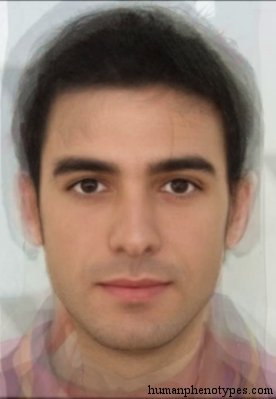
The word returns two rows, not one
Search the catalogue for the bare word and nothing matches exactly. The file holds 209 entries and not one of them is called Mediterranid. Only two names carry the word at all, and both arrive with a modifier attached: Gracile Mediterranid, filed under Southern Europe, and Trans Mediterranid, filed under North Africa. The search term is a family name, and the file stores members.
The two rows disagree about the family almost immediately. Gracile Mediterranid calls itself the Mediterranid proper, the most gracile type of Europe, and dates its first appearance to Mesolithic Natufian groups in Palestine, with its pin at 32.26 north and 35.30 east. Trans Mediterranid describes itself as a subtype intermediate between Eurafricanid and Gracile Mediterranid, possibly a gracilised Eurafricanid that moved west through migrations lasting up to Antiquity, naming the Phoenicians as one carrier. One row is a build, the other is a trajectory.
Deniker cut the word in two in 1900
Joseph Deniker's classification gave the Mediterranean type two subdivisions, Ibero-Insular and Atlanto-Mediterranean, and both survive in the catalogue's citations. Gracile Mediterranid's record says it was described early by Deniker as Ibero Insular. Eurafricanid's record lists Atlanto Mediterranid among its other names, credits Coon in 1939 and Hooton in 1946 with using it, and notes that Deniker had described a similar type earlier. Deniker's two halves are the two rows that later claim to be the proper one, which is why the bare word has no single answer.
Ripley's 1899 table explains why the term needed splitting. He gave the Mediterranean type a cephalic index that drops from 87 and above in the Alps to about 75 along the southern line, then wrote that this returns us to a head form almost identical with the Teutonic. The instrument that produced the family could not separate it from the northern type it was supposed to oppose. What did the separating in his table was hair, eye colour, stature and nose shape.
What proper is doing in forty-seven rows
Two rows claim the word proper, which reads at first like two competing claims to the real thing. It is not. The word appears in 47 of the 209 descriptions, attached to rows as far apart as Hallstatt, Arabid, Inuid and Robust Polynesid. It is a convention rather than a rank: proper marks the row that the others in a sub-family are described against, the reference point the modifiers depart from.
Eurafricanid's entry shows how a label narrows without ranking anything. Haddon in 1925 applied the term of Sergi from 1901, who had used it in a more general sense, and the catalogue says so. The row carrying proper is therefore downstream of a word that once covered a much wider set. The modifier did the narrowing and the narrow row inherited the name. Nothing in that sequence places one entry above another; it records where an author drew a line inside a family.
Five modifiers, five different grammars
The rows carrying the word qualify it in five ways, and the grammar of each modifier announces what kind of information it adds. Gracile is a build adjective and sorts by proportion rather than place. Trans is a direction. Eurafrican compounds two continents, and does it through Sergi's Euroafrican stock rather than a coastline. East, in East Mediterranid, is a compass bearing applied to the Balkans and the Black Sea coast. The fifth uses a suffix instead of a prefix, and it changes the argument.
Nesiotid is described as a Mediterraniform Polynesid variety, and the record adds that it has been noted for its Europoid features although no close genetic relationship exists. The suffix means in the form of, so the name states a resemblance and withholds descent in the same breath. Lundman coined Nesiotid in 1952, after Sullivan in 1923 described a gracile Europiform element and Giuffrida-Ruggeri in 1913 wrote of a pseudo-Mediterranid one. Three authors, three hedges, one shape.
Sixteen thousand kilometres from the sea
Nesiotid's pin sits at 13.77 south and 172.12 west, in Samoa, and its region field says Polynesia. The distance to Gracile Mediterranid's pin is about 16,555 kilometres. No coastline connects the two and the entry says as much. What travels is a set of proportions: a mesocephalic vault, a mildly leptorrhine nose, refined features, mild supraorbital arches. A Mediterranean vocabulary is being used as a shape description, and the record is candid that the shape arrived without the people.
The region field rewards the same reading. Litorid takes its name from the Latin for shore and is described as a type of coastal European regions, yet it is filed under Middle East with a pin at 38.06 north and 28.55 east, on the Aegean coast of Anatolia. Anatolid and Pontid are filed the same way. The field is an index for browsing, not a homeland claim. The rows discussed here sit under four different region labels, which is only a contradiction if the field is read as geography.
What the sea actually did
Sergi's 1901 book argued the opposite of a northern origin. The basin, he wrote, is not merely European, because Asia and Africa also form part of it, and he treated the whole basin as an anthropological unit. He called the stock Euroafrican, which is where Eurafricanid's name comes from, and placed its origin in northeast Africa rather than in Europe. The catalogue does not adopt his conclusion, but it keeps his word, which is the useful half: a name that records a hypothesis instead of hiding one.
The genetics that arrived a century later describes movement rather than origin. Paschou and colleagues reported in 2014, in PNAS volume 111, a study of 964 people from 32 populations typed at roughly 75,000 markers. They found structure correlating genes with geography around the sea, with east to west clines of gene flow, and their network analysis put the Anatolian to European route through the Dodecanese, Crete and the southern European coast. The catalogue cites that paper for the narrower claim that North African and European Mediterranids separate genetically.
That claim is the modern complication the entries cannot absorb. Trans Mediterranid's record dates its westward spread to migrations lasting up to Antiquity, and the Phoenician network it names ran for centuries before the catalogue's baseline of roughly 1500 years ago. Populations kept moving after the descriptions were written, and kept arriving. A row describes a sample recorded at a documented place and time; the coast it names has been a corridor for as long as it has been a coastline.
How to read a modifier
The method follows from the arithmetic. Choose the row by its modifier rather than the bare word, then read the traits block field by field and keep the citation year attached. Gracile Mediterranid is recorded as rather short, meso- sometimes macroskelic, ectomorph, the most gracile type of Europe. Eurafricanid, in the same family, is rather tall, ecto- to mesomorph, brachy- mesoskelic, with significant brow ridges and a coarse long face. Same word, opposite build, and the modifier is the variable that separated them.
What the rows cannot do is name a living person. Each describes a documented appearance pattern with a historical distribution, written by a named author in a named year, and each carries a pin marking where the sample was recorded rather than where anyone belongs. Read the modifier, read the traits, read the date, and the label stays inside the evidence that produced it. Read it as an identity and the file is being asked for something it never contained.
Frequently Asked Questions
- Is Mediterranid a phenotype in the catalogue?
- Not as a single entry. The 209-row file has no record by that bare name. Two rows carry the word, Gracile Mediterranid and Trans Mediterranid, and four more describe themselves as Mediterranid subtypes or as Mediterraniform. The bare word therefore names a family of related descriptions rather than one catalogued pattern, and a search for it has to be resolved against the modifiers.
- Why do two entries both call themselves proper?
- Because proper is a pointer, not a prize. The word appears in 47 of the 209 descriptions and marks the row that the other rows in a sub-family are measured against. Gracile Mediterranid is the Mediterranid proper and Eurafricanid is the Atlanto Mediterranid proper, which means each anchors its own subdivision. Reading the word as a claim to the original type produces an apparent contradiction the file does not contain.
- How far does the word Mediterranean reach in the file?
- As far as Polynesia. Nesiotid is described as a Mediterraniform Polynesid variety with a pin in Samoa, about 16,555 kilometres from Gracile Mediterranid's. The entry notes Europoid features while stating that no close genetic relationship exists, so the term is being used for a set of proportions rather than for a sea. The catalogue's region field is a browsing index, and the six rows carrying the word sit under four different labels.
Related Phenotypes
Faces from the encyclopedia that appear in this article. Open any entry for its full description, distribution, and references.
Gracile Mediterranid
Southern Europe
Mediterranid proper, smaller than other Mediterranids: the most gracile type of Europe. Appears first in Mesolithic groups of Palestine (Nat...
Trans Mediterranid
North Africa
Widespread Mediterranid subtype with many morphological features intermediate between Eurafricanid and Gracile Mediterranid. Possibly a grac...
Eurafricanid
Southern Europe
Atlanto Mediterranid proper type. Relatively old, present in early Natufians and European as well as North African megalith builders. Spread...
Nesiotid
Polynesia
Mediterraniform Polynesid variety. Has been noted for its Europoid features, although no close genetic relationship exists. Typical in Samoa...
Test what you learned
Put your eye for regional faces to work in the daily quiz — a composite face, a world map, and your best guess.