Human Migration and Physical Features: Four Entries, Four Clocks
Four entries on four continents run on four clocks, from a 25,000-year standstill in Beringia to a cemetery name that never dated the faces under it.
The arrow the phrase assumes
Ask how migration shaped physical features and the answer usually arrives as an arrow: a group left one place, reached another, and carried its faces along. The arrow has a single departure date, a single route and a single arrival. None of the entries in this catalogue behaves that way, and four of them fail the model in four different periods.
That mismatch is built into the record rather than caused by an error in it. Appearance was measured at one moment, and later readers supply the timeline themselves. A row can state where a pattern was common in 1900 and say nothing about when its components arrived, and those two facts routinely sit twenty thousand years apart. The four sections below take one entry each and ask what date could plausibly be attached to it.
Four entries, four departure dates
Four entries on four continents give four chronologies, and the distance between them is the argument. The dates below belong to appearances, not to the movement of peoples, and each one is counted from a different kind of evidence: excavation, genetics, linguistics, and the first dated occupation sites. Placed side by side they cover roughly twenty-five thousand years, which is the range a single migration arrow has to compress into one event.
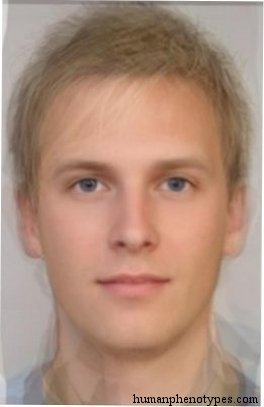
- Hallstatt borrows its name from an Austrian village whose Iron Age cemetery was excavated in the nineteenth century, and the culture the name labels ran from roughly 800 to 450 BCE. The appearance pattern filed under it was described from living populations two thousand years later.
- Bering Sea covers the Alaskan coast and St Lawrence Island, and its own text calls the type the result of a relatively late migration to America. The genetic version of that move is a standstill in Beringia between roughly 25,000 and 15,000 years ago, followed by a spread south once the ice corridors opened.
- Deutero Malayid sits at the end of the fastest of these movements: speakers leaving Taiwan around 5,000 years ago, crossing the Philippines and Indonesia, and reaching Madagascar by about 1,500 years ago. The entry itself records a range running from Madagascar to Easter Island.
- North Andid belongs to the earliest arrival, with people south of the equator in the Americas by roughly 14,500 years ago at Monte Verde in Chile and on the Peruvian coast at Huaca Prieta. The highlands were occupied within the following two millennia, and the entry describes Quechua speakers of the Andean plateau.
The longest span between two entries
Measured between their own coordinates, North Andid and Deutero Malayid sit 17,691 kilometres apart, which is 88 percent of the 20,015-kilometre half-circumference of the earth. Hallstatt to North Andid is 10,785 kilometres, Hallstatt to Deutero Malayid 11,059, and Bering Sea to North Andid 11,713. The widest of those gaps, the Pacific one, was closed by the group with the shortest documented departure window.
Distance turns out to predict difference poorly. Two rows 17,691 kilometres apart can share a body plan, while two rows a few hundred kilometres apart can sit at opposite ends of the cranial index, because the terrain between them changed faster than the people moved. A coastline carries a population further in two centuries than a mountain range does in twenty.
What the body follows is climate
Cold favours mass and heat favours surface. Bergmann's rule covers overall size, Allen's rule covers limb proportions, and Ruff's 1994 survey of modern skeletal samples found body breadth tracking mean annual temperature more tightly than stature did. The North Andid row describes a large thorax and short stature, which its text attributes to altitude, a different pressure that produces a partly similar shape.
The nose follows humidity more than temperature: Franciscus and Long reported in 1991 that nasal height and breadth vary with climate across human populations. Skin pigmentation follows ultraviolet radiation, in the trade-off between folate destruction and vitamin D synthesis that Jablonski and Chaplin modelled in 2000. Every one of these gradients is continuous, so two populations at the same latitude on different continents arrive at similar proportions without sharing an ancestor in the relevant window. Altitude makes the case cleanly: Tibetans, Andeans and Ethiopian highlanders all hold oxygen low at four thousand metres, and the variants responsible are not the same three.
The variants arrived on separate schedules
A trait is an assemblage of variants with separate histories. EDAR V370A thickens hair shafts, raises eccrine gland density and shovels the incisors, and it rose in East Asia around 30,000 years ago, a date Kamberov and colleagues attached in 2013 by combining ancient and modern genomes with a mouse model. SLC24A5, a major contributor to lighter skin in Europe, shows strong selection between roughly 5,000 and 4,000 years ago in the ancient genomes Mathieson and colleagues published in 2015.
Some arrivals came from outside the species. The EPAS1 variant that lets Tibetans hold haemoglobin down at altitude entered through introgression from Denisovans, as Huerta-Sánchez and colleagues showed in 2014. Lactase persistence is the clearest case of separate answers to one problem: the -13910 variant spread across Europe after Enattah's group mapped it in 2002, while Tishkoff's 2007 survey found three different variants performing the same function in East African pastoralists.
Where the map stops matching
The baseline here sits roughly 1,500 years ago, and the movements after 1500 redrew the samples it describes. The Atlantic trade carried millions of Africans to the Americas, indenture schemes moved Indians to Fiji, Mauritius, Trinidad and Natal, and the twentieth century added industrial cities that pulled labour out of whole provinces. The United Nations counted 281 million people living outside their country of birth in 2020, 3.6 percent of the world total, a share with no close precedent in the record.
Madagascar shows the same layering at small scale. Its language is Austronesian, its population mixes Austronesian and Bantu-speaking arrivals, and Pierron and colleagues dated the main admixture to about 1,000 years ago. The Deutero Malayid entry describes an eastward dispersal that reaches Madagascar and stops there; the later flow of African ancestry into the same island is a second event the row has no room for.
What four entries can and cannot show
They show that a documented appearance pattern has a place and a period, and that the period is almost always the one in which it was measured rather than the one in which its parts arrived. They cannot show a route. A row named after a cemetery, a strait, an island and a mountain chain records four kinds of place, and none of the four is a journey.
The reading that survives contact with the evidence treats each feature as the residue of several movements running on different clocks, some older than the species and some inside the last five millennia. Where a single arrow is the only shape available, the arrow carries weight the evidence will not support, and the four entries above are the counterexample. Two people can share a jaw shape for reasons twenty thousand years apart, and neither of them has to have travelled anywhere.
Frequently Asked Questions
- Do physical features record migration routes?
- Only loosely. Features track climate, altitude and humidity more closely than they track ancestry, so populations that arrive by different routes at the same latitude tend to converge on similar body proportions. The catalogue's North Andid and Bering Sea entries describe a large thorax and compact build for two unrelated reasons, altitude in one case and Arctic cold in the other. A route can be inferred from features only when the climate along it stayed constant.
- How long did people remain in Beringia before moving south?
- The current estimate is a standstill of roughly ten thousand years, between about 25,000 and 15,000 years ago, while the ice sheets blocked the interior route. The genetic argument comes from the branching pattern of Native American lineages, which diverge from Siberian ones well before the archaeological sites appear. The Mal'ta boy from Siberia, dated to about 24,000 years ago, carried ancestry that later contributed between 14 and 38 percent of Native American genomes in the models published in 2014.
- Why is a phenotype named after an archaeological site?
- Because nineteenth-century excavators named cultures after the place where they first dug, and later cataloguers reused those names for appearance patterns they thought belonged to the same people. Hallstatt is a village in Upper Austria with a cemetery and salt mines; the label now covers an Early Iron Age culture across central Europe and, separately, a facial pattern described from twentieth-century Scandinavians. The name is a place of excavation, not a date for the faces.
Related Phenotypes
Faces from the encyclopedia that appear in this article. Open any entry for its full description, distribution, and references.
Hallstatt
Central Europe
Nordid proper, resembles the Iron Age remains of the Austrian village of Hallstatt. Most common among Swedes and South Norwegians. Frequent ...
Bering Sea
Siberia
Western Eskimid variety common in Alaska and along the Bering Strait, esp. St. Lawrence Island. The result of a relatively late migration to...
Deutero Malayid
Southeast Asia
The insular counterpart of Shanids. Several components gave rise to this type in mainland Asia: Proto Malayid and Proto Sinid consumed other...
North Andid
South America
The most important and numerous Andid subvariety, adapted to the high altitudes of the Peruvian and Ecuadorian Andes. Typified by Quechua. T...
Test what you learned
Put your eye for regional faces to work in the daily quiz — a composite face, a world map, and your best guess.