How Many Human Phenotypes Are There? Four Counts, One Question
How many human phenotypes exist depends on whether you count people, named catalogue entries, measured variables, or the cells those variables create.
The number depends on the unit
A phenotype is the set of observed characters of one organism, which means any total is a total of observations rather than of objects. That single definition is why published figures for human phenotypes run from a few hundred to the population of the planet, a spread of seven orders of magnitude, without any of the authors being careless. They are counting four different things and printing the result in the same sentence. Naming the unit first is the only way to make the comparison honest.
The four units are worth separating before any figure is quoted. One counts individuals. One counts named patterns in a published catalogue. One counts measured variables inside a dataset. One counts the cells those variables produce once they are binned into classes. The last two are where most figures originate, and they are also the point at which the arithmetic stops describing the world and starts describing a filing system.
One phenotype per person
The only total that needs no convention is one per person. The United Nations 2024 revision puts the world population at about 8.2 billion, and on a strict reading each of those people carries a unique realised set of characters, so the number of living phenotypes is 8.2 billion. That sounds like a refusal to answer, but it is the floor the other counts rest on. A catalogue entry summarises many individuals, and a summary is not a further individual.
Once that is granted, the useful question becomes how much each summary discards. One entry can carry a skin tone range, a cranial index, a nose form, a hair texture, a stature class and a reading list, and still fit into a paragraph. Two individuals who both fall inside that paragraph may share almost none of the underlying measurements. The entry states a central tendency and implies a spread, and the spread is usually left unprinted because the source tables carried it and the prose did not.
Binning is a decision, not a discovery
The counting problem is easiest to see in a dataset rather than a book. William Howells measured 2,524 crania drawn from 28 populations between 1965 and 1980, taking up to 82 linear measurements per skull with calipers, and published the result in three Peabody Museum monographs in 1973, 1989 and 1995. That object is countable in a way a type name is not: 2,524 rows, 28 groups, 82 columns, each value logged to a tenth of a millimetre.
The vagueness arrives with the next step. Turning 82 continuous measurements into named types requires cutting each column into bins, and the number of possible combinations is the product of the bins. Three classes per measurement yields three to the eighty-second power of possible cells, an integer with 39 digits. That exceeds the number of people alive by about twenty-nine orders of magnitude. Almost every cell is empty, and the few that are not were filled by someone choosing where the cuts fall. A type is a populated cell with a name attached.
What the 209 entries actually count
This site publishes a catalogue of 209 entries, and the figure needs to be stated for what it is. It is not a count of human phenotypes. It is the number of named appearance patterns in this particular collection, each tied to a naming author, a year, a described region and a list of sources. The number is a property of one bibliography between two covers, not of the species, and a page that presents a figure of this kind as the total is describing its own shelf.
The narrower claim is more useful and survives checking. There are 209 documented patterns here, each with a citation trail, each reconstructed for roughly 1,500 years ago. A reader can take any entry and follow the works printed beneath it back to the monographs, and can see whether the description rests on fieldwork or on a synthesis that had already hardened. That traceability is what separates a catalogue from an inventory of words, and it is worth more than a larger total.
Three entries named after three things
The clearest evidence that a total tracks naming decisions rather than natural divisions is the names themselves. Three entries from three continents make the point, because each is named after a different kind of object, and none of those referents is a biological unit. A village, a river and a family of languages were all stable enough to be cited, which is precisely why each could serve as a label for a distribution of measurements taken from people.
- Hallstatt takes its name from a village in the Austrian Salzkammergut, and its description is anchored on Iron Age remains excavated there. The oldest source listed for it is Coon's 1939 survey of Europe.
- Huanghoid is named after the Huang Ho, the Yellow River. Liu defined and named it in a 1937 paper on the classification of Chinese populations, and the entry still records it as the Sinid proper.
- Central Bantuid is named after a language family. Ethnologue counts 535 Bantu languages, while estimates of the total run from about 440 to 680 depending on where a language is judged to stop and a dialect begins.
Why a bigger total is not a better answer
More rows do not mean more ground covered. Splitting an existing entry produces a larger total without producing a single new observation, and the catalogue shows its own seams. Central Bantuid is filed as a variety that some authors folded into South Bantuid, following Eickstedt in 1934, while Vogel in 1974 treated it as West Bantuid. One described pattern, three placements, and a total that shifts by two rows depending on which compiler the reader follows.
Names multiply the same way. The Mtebid type of the Caucasus was named by Lundman in 1967 from the Georgian word mtebi, meaning mountain, and the same body of measurements appears in Biasutti's 1967 synthesis under the name Georgiana, grouped with the Alpinoids of Europe. Two names, two shelves, one distribution. An inventory that lists three hundred or more entries has usually cut more finely, not travelled further, and the count alone cannot tell the two apart.
The total froze when the naming stopped
The contemporary complication is not migration by itself. It is that this kind of catalogue stopped being assembled. The entries here were compiled roughly between 1880 and 1980, and the practice of defining new physical types largely ended after that, for reasons internal to the discipline rather than because human variation ran out. The total sits in the low hundreds not because the species settled but because almost nobody is adding rows, which makes any figure drawn from this literature a statement about a period as much as about a place.
Meanwhile the distributions the rows describe kept moving. Hallstatt's record notes that Germanic groups carried traces of the type into Spain, Greece, North Africa and Russia in historic times, and Central Bantuid's notes that the type entered southern Africa with the Bantu expansion some millennia ago. Those are movement notes written by the same authors who drew the measurements. A reader who wants the number to mean something current should treat each entry as a dated statement about a place, then ask what has happened there since the measuring stopped.
Frequently Asked Questions
- How many human phenotypes are there?
- There is no single total, because the unit has to be fixed first. Counting individuals gives one phenotype per person, about 8.2 billion today. Counting named patterns gives the size of a published catalogue, which is 209 entries with citations on this site. Counting measured variables gives the columns in a dataset, such as the 82 Howells recorded across 2,524 crania. Each figure is correct for its own unit, and none of them is a count of human variety.
- Is 209 the total number of human phenotypes?
- No. 209 is the number of documented appearance patterns in this site's catalogue, each with a naming author, a year and a list of sources. It measures the size of one bibliography, not the extent of human variation. Other inventories cut the same material more or less finely and publish larger or smaller totals. The useful question about any of these figures is whether a reader can trace a single entry back to the literature printed beneath it.
- Why do phenotype catalogues disagree on the total?
- Because a total reflects where the compilers placed their cuts. A continuous measurement becomes a type only after someone chooses bin boundaries, and 82 measurements cut three ways produce an astronomically large number of possible combinations, of which a handful get named. Authors also split, merge and rename existing entries, so one distribution can be filed under two names or two regions. The totals differ because the filing differs, not because the observations changed.
Related Phenotypes
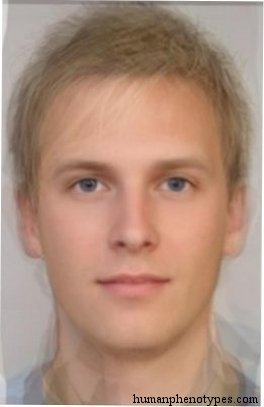
Faces from the encyclopedia that appear in this article. Open any entry for its full description, distribution, and references.
Hallstatt
Central Europe
Nordid proper, resembles the Iron Age remains of the Austrian village of Hallstatt. Most common among Swedes and South Norwegians. Frequent ...
Huanghoid
East Asia
North Sinid type, named after the Huang Ho (Yellow) river in Northern China. Developed from loess and millet farmers. Usually regarded as th...
Central Bantuid
Sub-Saharan Africa
Bantuid variety, characterised by elongated features and strong dolichocephaly. Found especially in Mozambique and Zimbabwe, also Malawi, Na...
Mtebid
Caucasus
Regional type of the Caucasus Mountains. Probably an Alpinised Dinaro-Armenid adapted to life in mountainous regions. Mtebids are typical of...
Test what you learned
Put your eye for regional faces to work in the daily quiz — a composite face, a world map, and your best guess.