hbd.gg Alternatives: Which Part Are You Replacing?
Alternatives to hbd.gg get compared as if they were one product at different prices, when each replaces a different part of the round. The menu, the grain of the answer, the image and the claim are four things to swap.
Four things an alternative can replace
A search for hbd.gg alternatives is a substitution request, and substitution requests are rarely precise. hbd.gg, a daily geography-style quiz that also trades as EthnoGuessr, builds rounds from composite faces of ethnic groups and asks players to place them on a map. Someone who leaves it for another site is usually reacting to one specific disappointment: the menu was too small, the regions named were too broad, the image was not what they wanted to look at, or the score did not mean what they hoped it meant.
Those are four different problems, and four different products answer them. Sorting options by reputation answers none of them, because the products do not sit on a single axis. A site with six modes is not a better site than one with a single daily draw, only a site that made a different trade. The useful way to read any alternatives list is to name the part you want replaced, then check whether the option replaces that part or merely replaces the logo.
What hbd.gg actually runs
The site states its premise in a single line: guess the geographic origin of ethnic groups based on their phenotype. Its mode menu lists Classic, which runs a daily challenge, alongside Genomes, Countries and DoggoGuessr, with a World Cup mode and a challenge format carried in the navigation. Each mode swaps the object of the guess rather than the mechanic, so Countries asks for a national origin from a country composite while DoggoGuessr keeps the loop intact and changes the species.
The feature most alternatives do not match is Genomes. The site invites players to submit their own ancestry results and photographs so that other players can guess where they came from, which means that mode runs on real photographs rather than on averaged faces. That is a different evidentiary basis, and it permits a kind of play a catalogue of composites cannot offer: the answer belongs to a named contributor who chose to appear. Whatever else a reader swaps, that advantage stays with hbd.gg.
Swapping the size of the menu
If the complaint was repetition, the replacement is breadth. A menu with several modes lets a player pick a session length and a subject, using a daily round as a habit, a themed round for twenty spare minutes, and a novelty round for a laugh. This site's daily draw is the opposite trade. One set of ten composites, selected by a date seed and shared by everybody who plays that day, makes scores comparable and makes the ritual dependable, but it leaves nothing to choose.
Neither arrangement is better in the abstract. Breadth multiplies entry points and thins each of them; a fixed draw sharpens a single thing and refuses to fill a long evening. A reader who wanted variety should take the multi-mode option and stop reading comparisons, since no amount of provenance compensates for a format that has started to bore them by Thursday, however carefully its answer set was assembled.
Swapping the grain of the answer
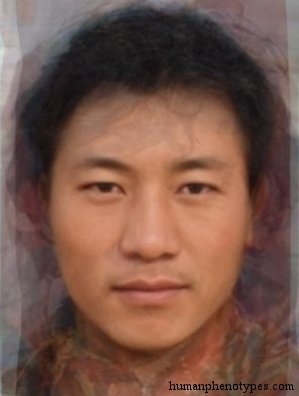
The second part is the unit the answer set is built from, and its grain varies by orders of magnitude. Kham names a robust Sinid variety concentrated in the Kham region of eastern Tibet, separated by Turner in 1913 and taken up by Morant in 1924 and Eickstedt in 1934: a highland population inside one river system. North Bantuid, defined by the same Eickstedt in 1934, runs from southern Somalia through Kenya, Tanzania, Uganda, Zambia and Zimbabwe, and after 1500 CE expanded as far south as Namibia. Libyid, named by Biasutti in 1941, covers steppes from Libya to Morocco and reaches Andalusia. Barrinean describes a forest belt in Queensland whose last speakers of the pattern were recorded as practically extinct around 1900.
The grain decides what a correct answer can mean. An entry spanning four thousand kilometres is difficult to be wrong about in the way an entry covering one valley is, and a round that pays out by distance to a documented centre will reward the coarse unit more often than the fine one. That is not a defect in any particular product; it is a property of the answer set. A reader who found the answers too broad wants narrower units, and a reader who found them too narrow wants the reverse.
Swapping the image for a photograph
The third part is the input. A composite round shows an averaged face and asks where the pattern behind it was recorded. A photo estimator takes a picture of a living person and returns a spread of labels. These are not the same task at different quality levels. The composite has an answer by construction, because a documented centre was chosen when the entry was written. The photograph has no answer of that kind, since no record exists against which a label for one individual could be checked, only a model's output and whatever confidence it attaches.
If the actual wish was to have your own face interpreted, the honest alternative is a different instrument rather than a better classifier. A direct-to-consumer DNA test measures markers and reports an estimate with a stated confidence, and it still reports an estimate. A face carries no genealogical record, so no product can extract one from a photograph however the interface is arranged.
Where the historical map has drifted
Every catalogue of this kind describes a period, and the period is old. The baseline used here is roughly 1,500 years ago, which is before the Bantu expansion reached Namibia, before the Indian Ocean trade carried North Bantuid speakers to Arabia and Iran, and before the nineteenth-century displacements that pushed the Barrinean remnant into the Queensland forests and then out of them. A round can be answered correctly about the map it was drawn on and still mislead about the street outside.
Read the score as a statement about a historical distribution and the drift stops mattering. Read it as a statement about the person in the photograph, or about the people standing at a bus stop in the region named, and the drift becomes the whole story. Movement is the ordinary condition of the record rather than an exception to it, and any alternative worth choosing says so somewhere on the page.
Which reader each option suits
A player who wants variety and themed rounds is best served by a multi-mode menu, and the Genomes offer has no equivalent here, because a round built on contributed photographs is a different proposition. A reader who wants the material behind a face, with a region, recorded traits and named sources for all 209 entries, is better served by a catalogue that publishes them. Someone who wants their own photograph labelled should treat any face-based estimator, including the ones advertised most loudly, as a demonstration rather than a measurement.
The test that survives all four substitutions is short. Ask what the answer set is made of, how coarse its units are, what the image really is, and what the number at the end measures. A site that answers those four questions in plain language can be trusted as a game. A site that answers none of them is asking for trust instead, which is a different transaction.
Frequently Asked Questions
- Is there a free alternative to hbd.gg?
- Several, but they replace different parts of the experience rather than the whole product. A single-draw daily quiz costs nothing to play and gives one fixed set per day. A map game built on country composites covers the same genre with a different answer set. A public catalogue of documented appearance patterns is free to read and needs no round at all. The one thing none of them reproduces is hbd.gg's Genomes mode, which runs on photographs contributed by players.
- Why do the regions in these quizzes seem too broad?
- Because the answer set was built at continent and subcontinent scale. One entry can run from Somalia to Namibia while another covers a single Tibetan river system, and a scoring rule based on distance to a documented centre tends to reward the broader unit. That is a property of the underlying catalogue rather than of the interface. A reader who wants finer units should look at how narrowly an entry defines its recorded range before playing.
- Can an alternative tell me my own ethnicity?
- No. A face quiz measures how close your answer came to a catalogued pattern with a recorded historical range, and a photo estimator returns a model's label distribution. Neither is an ancestry result. Ethnicity is a social label about people and descent, while appearance is a set of visible traits produced by a modest number of genes plus developmental noise. If ancestry is the real question, a DNA test addresses a better-posed version of it, and even that returns an estimate.
Related Phenotypes
Faces from the encyclopedia that appear in this article. Open any entry for its full description, distribution, and references.
Kham
East Asia
Robust Sinid variety, found in its highest concentration in Eastern Tibet, especially in the Kham region in nomads and warrior castes. Could...
North Bantuid
Sub-Saharan Africa
Widespread Bantuid variety of East Africa with relatively narrow noses, possibly due to Ethiopid influence. Found from South Somalia to Keny...
Libyid
North Africa
North African steppe type that is usually regarded as part of Orientalid. Although Arab invasions enhanced the Orientalid element in Africa ...
Barrinean
Australia
Australid subtype of the forest belt associated with the Australian pygmies. Could be the remnant of an ancient Negrito strain that once occ...
Test what you learned
Put your eye for regional faces to work in the daily quiz — a composite face, a world map, and your best guess.