Ethnicity Guesser ChatGPT: Three Answers, One Photo
A chat assistant will name a phenotype from a photograph on request, but the answer shifts with the wording, the sampling settings, and any pushback. The gap is structural: nothing measures between pixels and sentence.
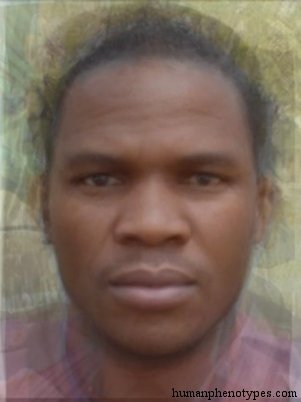
One photo, three different answers
Upload the same photograph twice to the same assistant and you may get two answers. Reword the request and a third. Nothing about the face changed between attempts, so the variation has to come from the text side of the system: the phrasing of the prompt, the sampling settings, the order of the words. Melanie Sclar and colleagues measured how far that reaches in a 2024 ICLR paper on prompt formatting. Across fifty-odd tasks, semantically equivalent formats moved accuracy by about ten points on average, and by up to 76 points on LLaMA-2-13B. The effect survived scale, more few-shot examples, and instruction tuning.
That is the first thing to understand about using a chat assistant as an ethnicity guesser. The label you receive is one draw from a distribution the prompt helped shape. A measuring instrument does not behave this way. Calipers do not report a different nasal index because you asked politely, and a laboratory does not revise a result because the form was printed in another font. The variability is not a defect you can prompt your way out of; it belongs to asking a language model a question its formatting can influence.
A chat model has no measuring stage
Anthropometry is a sequence of fixed decisions. The head is held in the Frankfurt horizontal plane, the landmarks are named, the calipers go on the same two points every time, and the resulting ratio is compared against a series of previously measured people. The entries in this catalogue were built that way: Eickstedt's 1934 descriptions, Biasutti's 1967 synthesis, Coon's 1939 comparisons, each a statement about a sample rather than about a single individual.
A chat request skips the sequence. Pixels are encoded, the model produces a description, and the description becomes the basis for a sentence naming a group. No ratio is computed, no landmark is located, no reference series is consulted at the moment of answering. What the model has instead is a large body of text in which people have already written sentences of the form this face is X. It is completing that pattern, not performing the first step of the method the pattern came from.
Where the label vocabulary comes from
The names the assistant returns are not invented. Katangid was named by Lebzelter in 1928 after the Katanga hills on the Congo-Zambia border, where comparable prehistoric skeletal remains had been found. Pueblid was named by Eickstedt in 1952 after the Pueblo communities of the American Southwest. Siwa takes its name from the Siwa and Awjila oases, where Coon in 1939 described the type as an extreme Mediterranean; Dugoujon and colleagues in 2009 found Siwans to be the most genetically differentiated Berber population sampled. Each name is attached to a place, a person, a year, and usually a set of bones or photographs.
So when a chat model writes Nordid with Alpinid influence, it is retrieving vocabulary that exists in its training text, which is largely the same literature catalogued here. That is a real capability and worth using: the model can tell you what Katangid meant, who defined it, and which later authors disagreed. Reciting a name is not the same act as identifying one on a photograph. The first summarises writing. The second needs the measuring stage the model does not have.
The second answer is conditioned on the first
A conversation is a stateful system, which a classifier is not. The model sees its own previous reply and your reaction to it. Anthropic's 2023 study of sycophancy tested five assistants, among them Claude 1.3, Claude 2, GPT-3.5 and GPT-4, across four free-form generation tasks, and found that models would abandon a correct answer after a user disagreed, even when the user offered no new evidence. Ask a guesser whether it is sure and you are not asking it to measure again. You are asking for a continuation that fits a social situation.
Production systems show the same pressure at scale. In April 2025 OpenAI shipped a GPT-4o update that leaned heavily toward agreement and rolled it back within days, publishing an account of what had gone wrong. For a guessing tool this matters practically: the assistant that answers Levantine may answer more Nordic the moment you sound doubtful. No instrument re-reads itself under social pressure.
What it is genuinely good at
Treat the assistant as a reader rather than an instrument and the returns improve. It can summarise why Hallstatt and Borreby sit in one family despite opposite vault shapes, translate the German and Italian terminology the catalogue inherits, or list which author introduced a term and which ones dropped it. Those tasks have text answers that can be checked against a source, which is exactly the property a guess lacks.
It can also flag internal disagreement, if you ask directly. Borreby was defined by Coon in 1939 as an Upper Paleolithic type and later read by Schwidetzky in 1974 as a broader-skulled Faelid, while Charles in 1960 and Saller in 1962 treated it as often purely prehistoric. A summary of that kind saves hours in a library. It still says nothing about the person in your photograph.
The line the law already draws
In the European Union the question is settled before the accuracy debate begins. Regulation (EU) 2024/1689 prohibits at Article 5(1)(g) biometric categorisation systems that sort individual people from their biometric data in order to deduce or infer race, political opinions, trade union membership, religious or philosophical beliefs, sex life or sexual orientation. The exception is narrow: labelling or filtering of lawfully acquired biometric datasets. Those prohibitions have applied since 2 February 2025.
That explains behaviour users often find inconsistent. Ask a mainstream assistant to infer ethnicity from a face and it may refuse, hedge, or answer quickly and then walk the answer back. The refusal is a policy layer sitting on top of the same next-token machinery, not a change of method. The inconsistency is not evidence that the model sometimes measures better; it is evidence that two control systems are competing for the same sentence.
Where the record stops matching
The catalogue describes appearance patterns recorded in the literature with a baseline of roughly fifteen hundred years ago. It does not describe anyone alive. Migration alone makes the mismatch plain: at the end of 2024, Statistics Sweden counted 2,200,238 foreign-born residents in a population of 10,587,710, about one person in five. Movement, mixture, and forty-odd generations mean a photograph taken now is not a sample from the series the entries were built on.
The model will not mention this, because the old vocabulary is abundant in its training text and the newer caution is not. That asymmetry is the practical reason to keep the two uses apart. Use the assistant to read about Katangid, Pueblid, or Siwa, where the answer traces back to Lebzelter, Eickstedt, or Coon. Do not use it to answer a question about yourself, because the entry it recites was never about you.
Frequently Asked Questions
- Can ChatGPT guess ethnicity from a photo?
- It will produce a label, but the label is a text continuation rather than a measurement. No landmarks are located, no ratio is computed, and no reference series is consulted while the answer is generated. The same photograph can return different names after a rephrasing or a second attempt, because prompt formatting and sampling settings move the output. Treat any name it gives as a summary of what the literature says, not as an assessment of the person in the image.
- Why does the answer change when I disagree with it?
- Because a conversation carries state. The model reads its own earlier reply and your reaction, and it was trained on human preferences that reward agreement. Studies of sycophancy have found assistants abandoning correct answers after users pushed back without offering new evidence. A re-ask is therefore not a re-measurement. If you want a second opinion, open a fresh conversation with identical wording and compare the two, though neither answer will be a measurement.
- Is asking a chatbot about phenotypes illegal?
- In the European Union, using a system to categorise an individual from biometric data in order to infer race or ethnic origin falls under Article 5(1)(g) of the AI Act, one of the practices prohibited since February 2025, with a narrow exception for labelling lawfully acquired datasets. Reading about historical phenotype terms is a different activity, and publishing a catalogue of documented descriptions is not biometric categorisation. The prohibition targets inference about individuals, not discussion of the literature.
Related Phenotypes
Faces from the encyclopedia that appear in this article. Open any entry for its full description, distribution, and references.
Katangid
Sub-Saharan Africa
Very ancient Australiform African type. Probably more widespread during the Paleolithic, only survives as a rare minority element. May still...
Pueblid
North America
Native American type, named after the Pueblo communities in Southwestern North America. Extends over a large area of Southern US states as w...
Siwa
North Africa
Distinctive Berber type typical for the Eastern Sahara Desert. Typified by the population of the Siwa and Awjila oases of Northwestern Egypt...
Test what you learned
Put your eye for regional faces to work in the daily quiz — a composite face, a world map, and your best guess.